
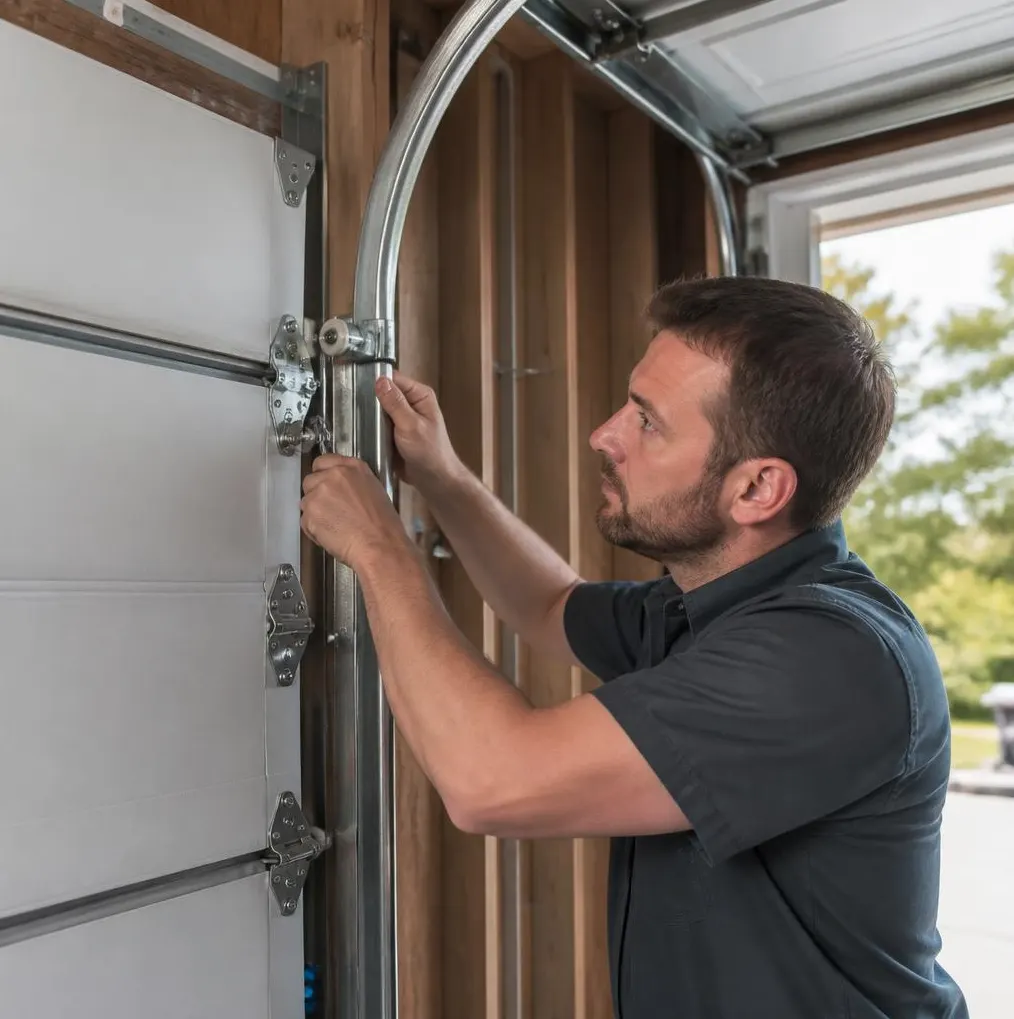
Rule of thumb: if your opener is under eight years old and only one part has failed, repair it; if it's older and multiple systems are failing at once, replace it. The exceptions matter more than the rule, though, especially in a climate that's hard on electronics and hardware for months at a stretch.
Garage door openers in this region deal with a specific kind of wear. Damp air gets into circuit boards and wall-mounted controls. Condensation forms on metal components in unheated garages. Wind and ice storms cause power outages that stress motors and strip the charge from battery backups. None of this means you need a new opener every few years, but it does change the math on when repair stops making sense.
What repair actually costs over time
A single-issue repair, like a sensor realignment, a new remote, a logic board fix, or a worn drive gear, is usually the cheaper move in year one. National repair ranges for these jobs typically run from under $100 for simple fixes up to a few hundred dollars for parts like circuit boards or drive assemblies. The catch is that repairs compound. An opener that's already shown one age-related failure is statistically likely to show another within a year or two, especially if moisture intrusion is the underlying cause rather than a one-off part failure.
Here's what that looks like in practice over five years:
- Year 1: Replace a failing sensor or remote. Low cost, opener runs fine afterward.
- Year 2–3: Chain or belt starts slipping, or the opener runs louder than it used to. Another repair, moderate cost.
- Year 4: Circuit board or motor capacitor fails, often after a power surge from a storm. Larger repair bill, and now you're close to the price of a new unit.
- Year 5: A second major component fails. At this point the homeowner has paid for three or four repairs and still owns an aging opener with no warranty.
Add it up and the total often lands close to, or past, the cost of replacement, without the benefit of a warranty or newer safety features.
What replacement costs and what you get
A new opener installation typically falls in the range of several hundred dollars, depending on the drive type and features, with belt-drive units costing more upfront but running quieter, which matters if the garage sits under or next to living space. Replacement resets the clock: new warranty, updated safety sensors, and in most current models, a battery backup that keeps the door operable during the power outages that come with winter wind storms here. That backup alone is worth factoring in for anyone who's been stuck trying to hand-crank a garage door open during a blackout.
The trade-off is the upfront cost and the fact that a working-but-aging opener still has value if the issue turns out to be minor. Replacing an opener that only needed a $150 sensor fix is money wasted.
Side-by-side, over five years
- Repair path: Lower cost now, higher cumulative cost if failures continue, no warranty reset, keeps using aging electronics in a damp environment.
- Replacement path: Higher cost now, predictable cost after that (just maintenance), warranty coverage, battery backup, often quieter operation.
Exceptions to the simple rule
Age isn't the only variable. A few situations change the calculus:
- The opener is old but lightly used. A unit on a detached garage used once a week may outlast a heavily used attached-garage opener by years, even at the same age.
- The damage is storm-related, not age-related. A circuit board fried by a power surge on an otherwise newer, well-maintained opener is worth repairing. The rest of the unit is fine.
- The garage has chronic moisture problems. If you're seeing rust on hardware, moss creeping along the door panel edges, or soft spots on a wood door, the opener is operating in a hostile environment no matter its age. In that case, sinking money into repeated opener repairs without addressing drainage, weatherstripping, or ventilation in the garage is treating the symptom, not the cause.
- You rely on remote access features. If you want smartphone control, cameras, or smart-home integration, older openers often can't be retrofitted cost-effectively. Replacement is the only real path to those features.
What makes sense for a typical home in this area
Given the housing stock and weather here, mild temperatures, long stretches of rain, and the occasional ice or wind event, most homeowners come out ahead with one of two choices: repair openers under roughly six to eight years old when the failure is a single, identifiable part, and replace anything older once a second major component fails. The in-between case, a mid-life opener with one clear mechanical issue and no history of repeated problems, is almost always worth fixing. It's the repeat-repair pattern that signals it's time to stop patching and start budgeting for a new unit with a battery backup, which pays for itself the first time a storm knocks out power overnight.
When to call Seattle Garage Door
If your opener is acting up, intermittent response from the remote, grinding noises, the light blinking an error code, or the door reversing for no reason, it's worth having it looked at before guessing. Seattle Garage Door's technicians handle both Garage Door Opener Repair & Installation and ongoing Garage Door Maintenance, and can tell you honestly whether a repair will hold or whether you're about to be back on the phone in six months. For homes dealing with chronic damp or storm-related power issues, we'll also flag anything beyond the opener itself, like weatherstripping or hardware corrosion, that's shortening its lifespan.
If your opener has you wondering whether this is the last repair or the first of several, call Seattle Garage Door for a straight answer and a quote, serving Seattle, Shoreline, Kenmore, Lake Forest Park, Bothell, Lynnwood, Mountlake Terrace, and Edmonds.